
If you’re self-employed or starting a small business, you may need a way to legally separate yourself from your business activities. LLCs are popular business structures in the U.S. due to their flexibility and relatively simple paperwork.
Let’s walk through how to establish an LLC, as well as the requirements, advantages, and potential pitfalls.
Table of contents:
- What is an LLC?
- How to start an LLC: 8 essential steps
- State-specific LLC requirements
- The pros and cons of an LLC
- Common LLC pitfalls to avoid
- Help Protect your small business with LegalShield
- Frequently asked questions
What is an LLC?
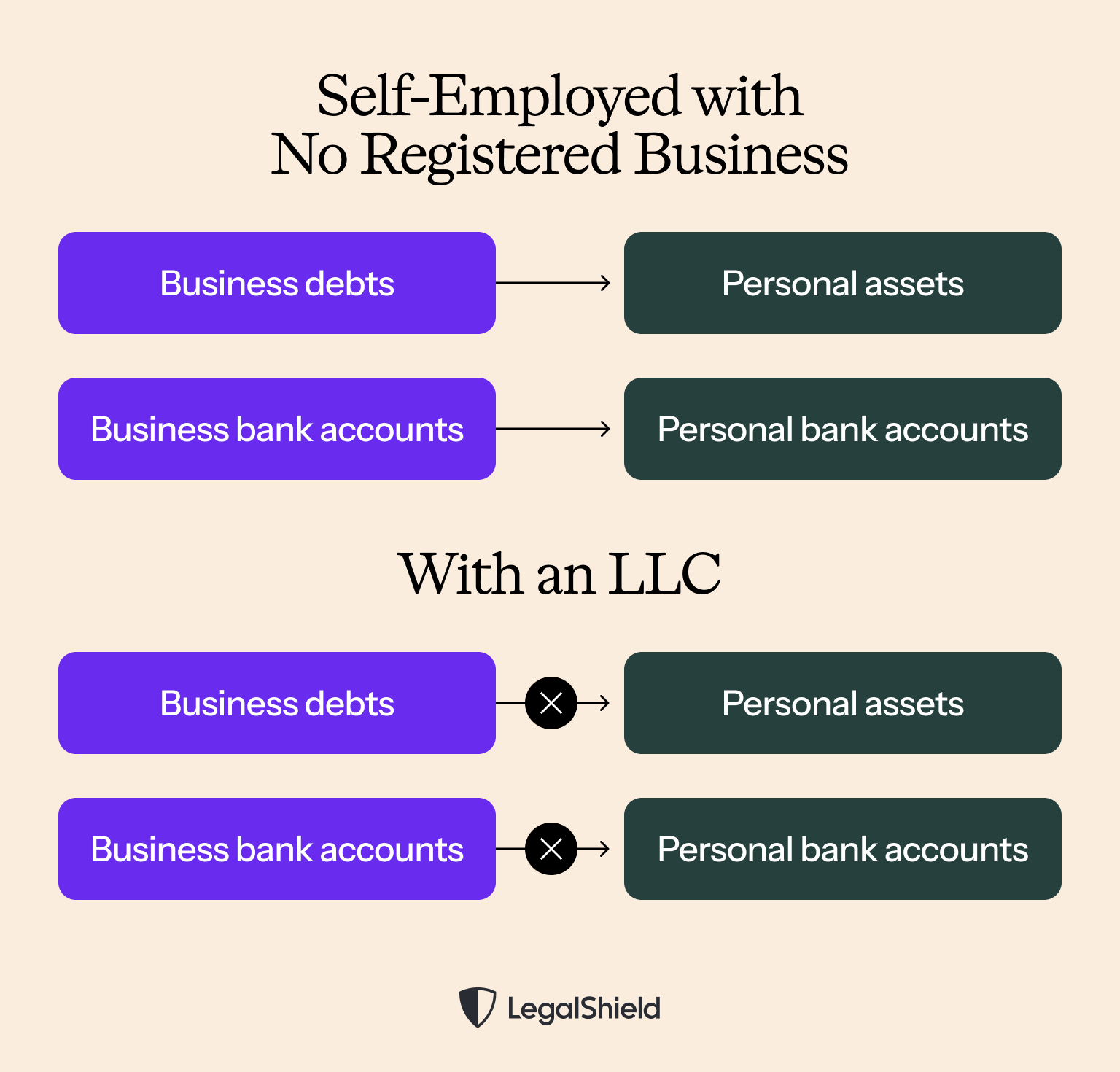
An LLC is a business structure that combines the personal liability protection of a corporation with the tax flexibility and operational simplicity of a partnership or sole proprietorship. The owners of an LLC, called members, are generally protected from the business’s liabilities.
LLCs can be single-member or multimember, and can include individuals, corporations, trusts, foreign entities, and even other LLCs.
- Single-member LLCs have only one owner, and the owner generally reports taxes on their individual tax return.
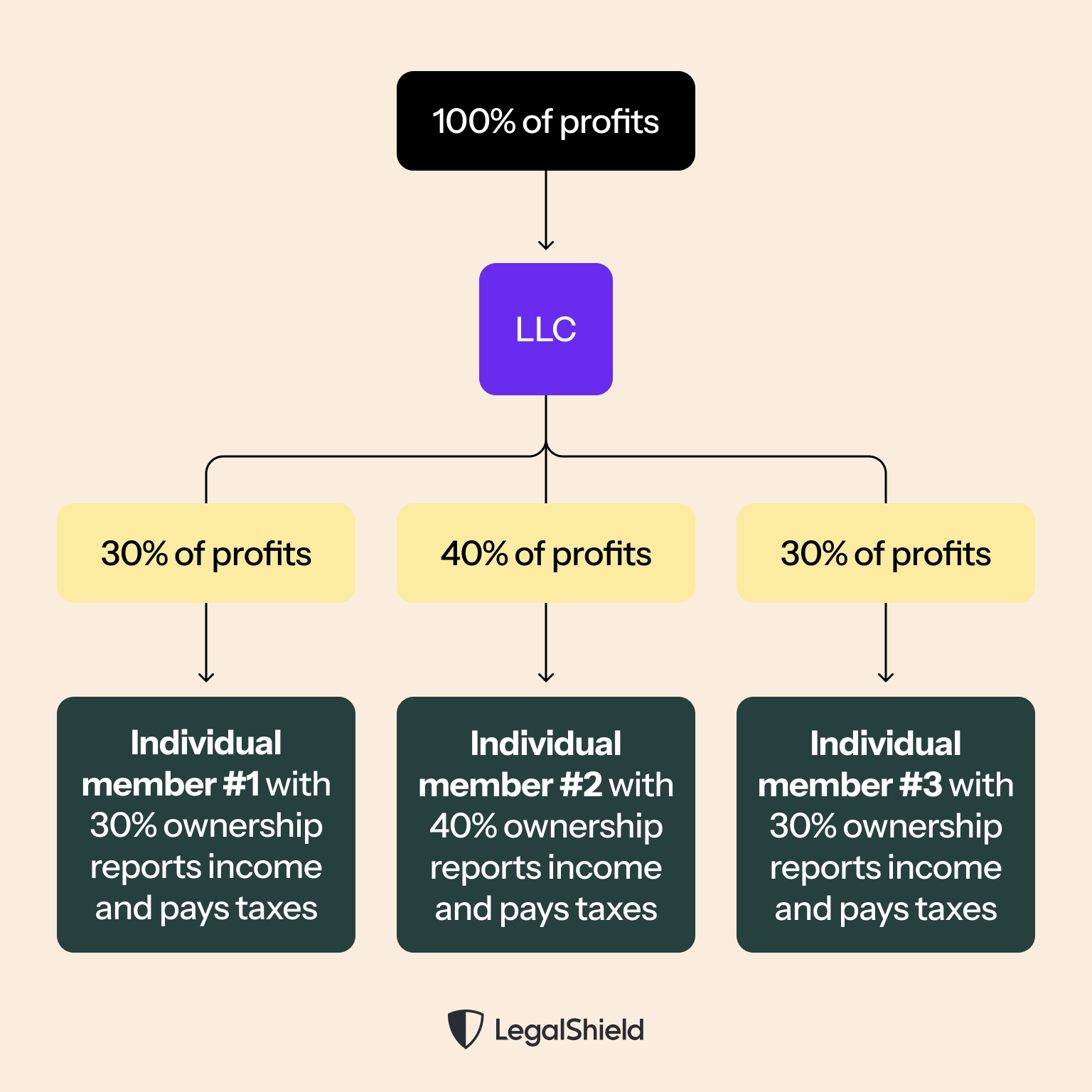
- Multi-member LLCs can have multiple owners and often get the same tax treatment as partnerships.
"In general terms, an LLC is a better option for small businesses that want the ease of setup, more straightforward taxation pass-through structure, and managerial flexibility than with a corporate entity, while still maintaining the personal liability insulation," explains Bill Thrush, managing partner of Friedman, Framme & Thrush.
How to start an LLC: 8 essential steps
It’s relatively simple to create an LLC, but each state has different rules for forming one. Here are the steps you need to take:
1. Choose your business name
Your business name is crucial both for legal compliance and marketing. When selecting a name, make sure you:
- Check availability through your Secretary of State's website
- Ensure the name complies with state regulations
- Most states require your name to include "LLC," "Limited Liability Company," or similar designations
- Avoid restricted words (like "bank" or "insurance")
- Consider trademark considerations
- Secure a matching domain name if possible
"We start by meeting with the LegalShield Member, figuring out what type of business they will be doing, how many employees they will be having, etc. Then we check with the Secretary of State to see if the name is available," shares Andy Joyce, partner at Morrow Poppe Law Firm.
2. File your Articles of Organization
The Articles of Organization (sometimes called a Certificate of Organization or a Certificate of Formation) is the official document that creates your LLC. Many states have moved to online filing, so check your state’s Secretary of State website to learn how to file and find the correct articles of organization form.
When filing your articles, you'll typically provide:
- Your LLC's name
- Business purpose
- Principal address
- Duration of the LLC (often perpetual)
- Registered agent information
- Management structure (member-managed vs. manager-managed)
LLC filing fees vary by state, ranging from about $35 in Montana to $500 in Massachusetts. Processing times also vary depending on your state and whether you choose expedited processing.
Joyce notes the Nebraska process: "In Nebraska, we start by meeting with the member, figuring out what type of business they will be doing, how many employees they will be having, etc.
"Then we check with the Secretary of State to see if the name is available, file the necessary documents to form the company with the Secretary of State and then publish notice with a local paper to adhere to Nebraska statute."
3. Designate a registered agent
Every LLC needs a registered agent — a person or company designated to receive legal documents on behalf of your business.
"Choose a registered agent — someone who will act as the liaison between your business and the general public," advises Thrush.
Requirements for registered agents:
- Must be at least 18 years old
- Must have a physical address (not a P.O. box) in the state where your LLC operates
- Must be available during normal business hours
- Can be yourself, another LLC member, or a professional registered agent service
4. Obtain an EIN and set up business accounts
An Employer Identification Number (EIN) for an LLC is like a Social Security number for your business. As Thrush explains, you'll need to "Set up your back office with Employer ID Number or Tax ID number, bank account, accounting software, and any insurance policies you may need."
The EIN is essential for:
- Tax filing purposes
- Hiring employees
- Opening a business bank account
- Applying for business licenses
You can obtain an EIN for free through the IRS website in minutes.
5. Prepare an LLC operating agreement
LLC documentation includes operating agreements, articles of organization, and other documents as required by individual states. While not always legally required, an operating agreement is strongly recommended.
"The operating agreement is probably where the largest pitfalls live," warns Joyce. "Many people overlook this step and simply say that they will iron out the details once the company is established and profitable. By then, it's too late. The operating agreement is essentially the Bible for your company."
Your operating agreement should include:
- Ownership percentages and member roles
- Voting rights and decision-making procedures
- Profit and loss allocation
- Meeting requirements
- Rules for adding or removing members
- Dissolution procedures
Joyce emphasizes: "By spending time and energy working through those issues on the front end, it can save you thousands of dollars litigating it on the back end."
6. Obtain necessary business licenses and permits
Depending on your industry and location, you may need various licenses and permits to legally operate, such as:
- General business licenses
- Professional licenses
- Health department permits
- Zoning permits
- Industry-specific certifications
Research requirements at the federal, state, and local levels to ensure complete compliance.
7. Maintain your LLC’s active status
Forming an LLC comes with the responsibility of keeping the business active and in good standing. There are some ongoing management tasks you’ll need to get used to:
- File annual or biennial reports (requirements vary by state)
- Pay ongoing fees and taxes
- Maintain required business licenses and permits
- Keep your registered agent information current
- Hold regular member meetings (if specified in your operating agreement)
- Keep business and personal finances strictly separate
"The main mistake that people make is not taking ALL of the various requirements, large and small, seriously," cautions Thrush. "It is not for you as a business owner to judge whether some requirements are important [and] some are not.
"They are all important. And if you miss them, the consequences could be the invalidity of your business entity, which could put your personal assets at risk to your creditors."
8. Engage your state’s compliance reporting
LLC reporting requirements vary by state, so check your state’s Secretary of State website to make sure you’re setting it up correctly. These are some of the requirements specific states have:
- California requires an $800 annual tax for LLCs and an additional franchise tax based on revenue.
- New York and Nebraska have a newspaper publication requirement for new LLCs.
- Texas has a franchise tax based on revenue.
- Florida requires an annual report by May 1st each year.
- Oklahoma and a few other states require an annual fee to keep your LLC active and in good standing.
The pros and cons of an LLC
While LLCs provide simplicity and flexibility compared to other business entities, they’re more limited than corporations. In particular, single and multi-member LLCs operate with tax pass-through by default, which has pros and cons.
Here’s a closer look at the pros and cons of an LLC:
LLC pros
LLCs are known to be flexible and are attractive to small businesses and independent operations due to low costs and easy management.
These are some of the advantages that come with obtaining an LLC:
- Personal liability protection: Your personal assets are generally protected from business debts and lawsuits.
- Tax flexibility: Choose how your business is taxed. Tax is pass-through by default, but you can elect to treat it as a corporation.
- Less paperwork and formality: There are fewer compliance requirements than in corporations.
- Management freedom: There’s no requirement for boards of directors or officers, and you can decide whether an LLC is managed by its members or assigned managers.
- Credibility: An LLC enhances your professional image with customers and partners.
- Lower costs: LLCs tend to be cheaper and easier to establish and maintain than other business types.
- Investment and profit: Levels of investment don’t need to match levels of ownership, and there’s flexibility in how profits are distributed.
LLC cons
While there are many benefits to LLCs, they aren’t right for every business. Their flexibility means they don’t share some of the advantages and options available to corporations. Here are some considerations to keep in mind:
- Self-employment taxes for members: Taxes of an LLC "flow through" the members, which means that the business itself is not taxed as a separate entity. Due to this flow-through, members may be subject to self-employment taxes. However, you may be able to elect to have the LLC taxed as a corporation, depending on the circumstances.
- State-specific regulations and fees that vary widely: Because they’re controlled at the state level, each state has different rules for LLCs. Make sure you research your state’s requirements.
- Limited life spans: In some states, the duration of formation is limited, resulting in you having to reform an LLC if it is still in use.
- Limited options for raising capital compared to corporations: LLCs cannot conduct IPOs, which makes them less attractive to potential investors.
Common LLC pitfalls to avoid
If you’re self-employed, you might be used to running your personal life and your business a certain way. Starting an LLC brings new requirements, and you’ll need to prepare for the transition.
Continuing to run your business through your personal accounts, for example, can make it much more difficult to use liability protection.
Here are the pitfalls you should avoid if you’re considering starting an LLC:
- Failing to separate business and personal finances: Open a separate business bank account and avoid commingling funds. Maintaining a clear separation between your personal and business finances is crucial for preserving your liability protection.
- Skipping or rushing the operating agreement: As Joyce emphasized, the Operating Agreement is critical for avoiding future disputes. Take the time to create a comprehensive agreement that addresses potential scenarios before they arise.
- Not understanding tax obligations: Consult with a tax professional to understand your specific tax requirements and consider whether electing a different tax status (such as S-Corp) might benefit your business.
- Overlooking state-specific requirements: Each state has unique requirements for LLCs. Research your state's specific regulations or consult with a local attorney to ensure compliance.
- Not keeping up with ongoing requirements: Remember that obtaining an LLC is just the beginning. Stay on top of annual reports, fees, and other ongoing compliance requirements to maintain your good standing.
Help Protect your small business with LegalShield
Forming a business entity is a significant milestone. Once you’ve formed your business, you may need ongoing support to protect yourself.
LegalShield gives you access to a dedicated law firm for answers on business-related legal matters, including consultation on pre-existing issues.
Advanced tiers of our Small Business Legal Plans include designated consultations for specialized areas like taxes and business formation, allowing members to get ahead of potential issues before they become problems. Plus, your provider law firm can offer up to one hour of legal research per business-related issue, such as compliance requirements. And even defend your business in a trial when named as a defendant in a covered civil action.
Reach out to a LegalShield Independent Associate to learn how a Small Business Legal Plan can support your business at every stage.
Frequently asked questions
How much does an LLC usually cost?
LLC startup fees can be anywhere from $35 to $500, depending on the state. There may be additional fees for registering agents, annual reporting fees, franchise taxes, and other fees.
Where should I form my LLC?
Generally, you should form an LLC in the state in which you live or operate the business. It’s possible to form LLCs in other states, but this is more complex and can involve additional fees.
Can I own an LLC by myself?
Yes, you can own an LLC on your own. This is known as a single-member LLC, and it’s great for self-employed people who want liability protection and a separation of their personal and business finances.
LegalShield is a trademark of Pre-Paid Legal Services, Inc. (“LegalShield”). LegalShield provides this blog as a public service and for general information only. The information made available in this blog is meant to provide general information and is not intended to provide legal advice, render an opinion, or provide a recommendation as to a specific matter. The blog post is not a substitute for competent legal counsel from a licensed professional lawyer in the state or province where your legal issues exist, and you should seek legal counsel for your specific legal matter. All information by authors is accepted in good faith. However, LegalShield makes no representation or warranty of any kind, express or implied, regarding the accuracy, adequacy, validity, reliability, availability, or completeness of such information. The materials contained herein are not regularly updated and may not reflect the most current legal information. No person should either act or refrain from acting on the basis of anything contained on this website. Nothing on this blog is meant to, or does, create an attorney-client relationship with any reader or user. An attorney-client relationship may be formed only after the execution of an engagement letter with an attorney and after that attorney has confirmed that no conflicts of interest exist. Nothing on this website, or information contained or transmitted by this website, is intended to be an advertisement or solicitation. Information contained in the blog may be provided by authors who could be a third-party paid contributor. LegalShield provides access to legal services offered by a network of provider law firms to LegalShield members through membership-based participation. LegalShield is not a law firm, and its officers, employees or sales associates do not directly or indirectly provide legal services, representation, or advice.