
Protecting what you’ve worked for isn't something to leave to chance. So, when major life changes occur, like a marriage or the birth of a child, it's a good idea to update your Will to reflect your current wishes. That way, you know that your loved ones will be taken care of after you pass away.
There are several ways to do this yourself, but a mistake could leave your loved ones facing legal issues during one of the hardest moments in their lives. That’s why we have laid out these basics about Will preparation for you. We’ll explain more about how to update a Will, and why it’s best to do so with legal help.
How can you change a Will?
There are several ways to update your Will that probate courts typically recognize. Some include:
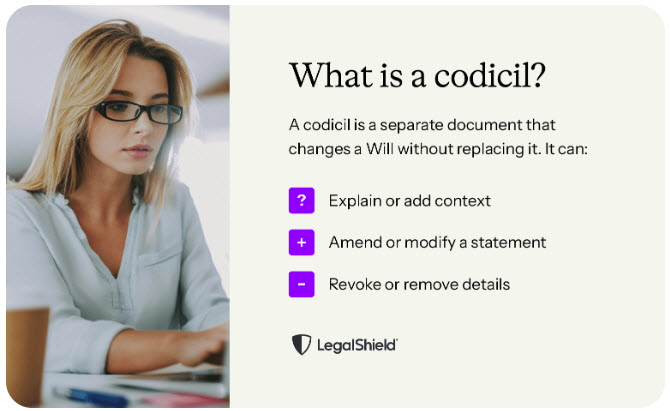
- Creating a codicil: A codicil is a new legal document that is an addition to your Will. Codicils are a good way to make simple changes, such as naming a new executor.
- Writing a new Will: You can write an entirely new Will if you need to make major changes, like amending who you want to inherit. It’s also a good idea to write a new Will if you need to make multiple changes or if your circumstances have changed multiple times.
- Adding a personal property memorandum: You can add a new personal property memorandum to your Will or replace an existing one. This memorandum lets you leave certain property to specific people. For example, you could specify who gets a piece of jewelry or an antique. A memorandum can also be a good choice for willing new assets.
When might someone change their Will?
Changing a Will isn’t uncommon. Lives and families are always evolving, and estate plans can and should reflect that. Some significant life events that may warrant an update include, but are not limited to, these kinds of situations:
- Marital updates—including a marriage or divorce
- Family additions—including a birth, adoption, or addition of stepchildren
- Other familial changes—including a death
- Pre-travel—especially before a long trip or international trip
- Relocation to another state or country
- Asset updates—including the addition or removal of assets
Protecting your legacy with a current Will is vital. You should think about making a Will or updating your Will if you’ve had a major life change or have new assets you would like to safeguard.
You can update a Will without a lawyer, but getting help from a LegalShield® provider law firm can give you extra assurance that it’s legally binding. A provider lawyer can tell you about types of Wills and estate plans that could be right for you.
Should you change a Will without a lawyer?
Although you technically don’t need a lawyer, updating or writing your own Will yourself increases the chance of making a mistake. Even if you don’t make a significant error, a lack of clarity in your language can lead to confusion about what you intended.
Making updates involves carefully reviewing your Will and adding changes in precise language. You’ll also need to follow your state’s laws for having the document signed before witnesses, and sometimes even a notary. Ask a lawyer for help understanding the requirements in your area.
The best way is to get a lawyer to draft the document for you, putting your wishes in strong, clear language. This doesn’t have to be expensive; you can make sure that your estate planning documents are valid and up-to-date with a LegalShield Membership. Get legal advice and have a lawyer draft your Last Will & Testament without having to pay costly hourly rates.
.jpg)
Why is it so hard to update a Will without a lawyer?
Here’s why it makes sense to get a lawyer to at least review your Will:
State laws vary
Each state has its own laws that direct how to make a legally binding Will. There may be requirements for who you can name as your executor or differences in spousal rights. For example, according to the Texas State Law Library, you can’t name an out-of-state resident as your executor unless they have a Texas lawyer. You also usually can’t name someone who has been convicted of a felony.
You need to follow the laws of your state to the letter, or the changes to your Will may not hold up in court.
Holographic Wills may be contested
A holographic Will is a handwritten Will that you make yourself, usually without needing witnesses. Some states allow them, but they’re more likely to be contested than a Will made following more formal legal processes. It’s best to use other methods for updating a Will.
Witnesses or notaries may be required
You may need to sign your updated Will in front of a notary and witnesses. The witness might also need to sign. If you don’t follow the rules for signing in your state, it may not be legally binding.
Will updates do not change non-probate assets
Some assets don’t have to go through probate court, including assets held in a Living Trust or jointly owned property. Updates to your Will may not change what happens to these. It's helpful to have your estate plan cover both probate and non-probate assets so that it fully reflects your wishes.
You could create conflicts
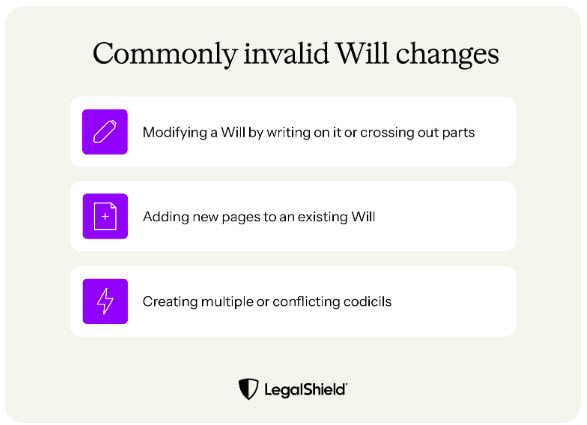
If you don’t review your current Will carefully, you could accidentally add a codicil or personal property memorandum that conflicts with it. For example, the codicil may leave a stock to your daughter, while the Will still leaves it to your son. Once you make updates, it’s a good idea to mark any copies of your old Will with a sentence clearly revoking the original inheritance.
You don’t have to worry about these potential pitfalls when you work with an experienced lawyer. With a LegalShield legal plan, you get access to a provider law firm that can advise you on a broad range of estate planning issues. You can feel confident that changes to your Will are legally binding.
When to consider a lawyer for Will updates
Some estates (and families) are more complex than others. The more assets and issues you have, the higher your chances are of making a mistake.
People most often need a lawyer to help update their Wills when they:
- Have complicated family dynamics
- Have a high potential for conflict
- Own a business
- Own a lot of assets
- Own property in multiple states
In general, if you want to feel confident that your Will is accurate and legally enforceable, you should consider working with a lawyer to make updates. With a LegalShield Personal Plan, anyone can get connected to legal advice that doesn’t break the bank.
Plan your legacy with ease with LegalShield
There are many reasons you should have a Will that is up to date and legally binding, not least of which is to protect the people you love.
When you update a Will without a lawyer, you risk making mistakes that could invalidate it. You can take the stress and worry out of the process with help from a LegalShield Provider Lawyer. Your assigned law firm can help you make an estate plan that is current and meets your needs.
Reach out to a LegalShield Independent Associate to select the legal plan that's right for you and your family.
Frequently asked questions
How much does it cost to amend a Will?
Updating a Will can cost multiple hundreds of dollars. Much of this cost is in lawyer fees. It’ll be more if you have a complex Will, need a new estate plan, or live in an expensive market.
You can get more affordable legal help with a LegalShield Personal Plan.
Can I update my Will myself?
You can update a Will yourself, but you must follow procedures to ensure it is legally binding. Working with a lawyer can give you peace of mind that your changes are valid.
Can I make handwritten updates to a Will?
Making handwritten updates to a Will is not preferred. These changes are more likely to be contested in probate court than those made through official processes.
What should I do after updating a Will?
After updating a Will, you should file away the new copy with other important documents. You may want to do this digitally and physically. You should also let your executor know about the changes and where to find the new Will.
Sources:
- Texas State Law Library. (n.d.). Estate executors. Probate law. https://guides.sll.texas.gov/probate/estate-executors
LegalShield is a trademark of Pre-Paid Legal Services, Inc. (“LegalShield”). LegalShield provides this blog as a public service and for general information only. The information made available in this blog is meant to provide general information and is not intended to provide legal advice, render an opinion, or provide a recommendation as to a specific matter. The blog post is not a substitute for competent legal counsel from a licensed professional lawyer in the state or province where your legal issues exist, and you should seek legal counsel for your specific legal matter. All information by authors is accepted in good faith. However, LegalShield makes no representation or warranty of any kind, express or implied, regarding the accuracy, adequacy, validity, reliability, availability, or completeness of such information. The materials contained herein are not regularly updated and may not reflect the most current legal information. No person should either act or refrain from acting on the basis of anything contained on this website. Nothing on this blog is meant to, or does, create an attorney-client relationship with any reader or user. An attorney-client relationship may be formed only after the execution of an engagement letter with an attorney and after that attorney has confirmed that no conflicts of interest exist. Nothing on this website, or information contained or transmitted by this website, is intended to be an advertisement or solicitation. Information contained in the blog may be provided by authors who could be a third-party paid contributor. LegalShield provides access to legal services offered by a network of provider law firms to LegalShield members through membership-based participation. LegalShield is not a law firm, and its officers, employees or sales associates do not directly or indirectly provide legal services, representation, or advice.